
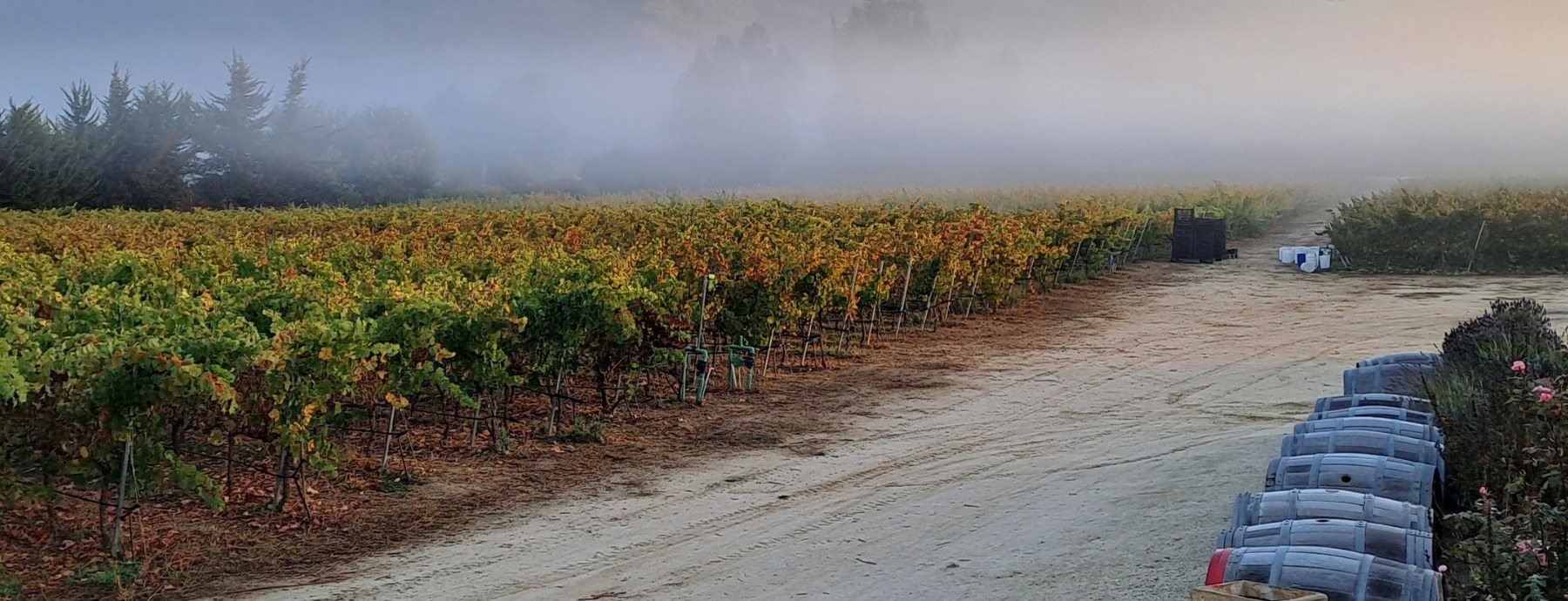
CASABLANCA · CHILE
Chilean wine changed when it turned towards the ocean.
For decades, Chilean viticulture developed mainly in the inland valleys.
Casablanca opened up a different possibility. The Pacific influence, cool mornings and breezy afternoons showed that the coast could produce tenser, fresher, more precise wines.
What seems obvious today was, at the time, a risky bet.
CASABLANCA VALLEY
Here the landscape is not the stage. It is part of the wine.
In the late 1980s, a few producers began looking towards the coast. Among them, Pablo Morandé helped prove that Casablanca could make high-quality wines when many still considered the valley too cold for viticulture.
Over time, Casablanca became one of the main references for Chilean coastal wine.
Its closeness to the Pacific, the morning fog, the constant wind and the granitic soils still define its identity today.
A recent history
1982
First modern plantings in Casablanca.
1990s
The valley establishes itself as a reference for cool-climate wines.
2011
We arrive in Orrego Arriba.
2012
We plant our first vines.
Today
Eight varieties planted.
COASTAL CLIMATE
The Pacific influence is felt every single day.
Sea fog
It moderates temperatures and protects the natural freshness of the grapes.
Coastal wind
It keeps the vineyard ventilated and encourages slow ripening.
Granitic soils
They force the roots to dig deeper in search of resources.
OUR VINEYARD · ORREGO ARRIBA
Within Casablanca we looked for one of its most exposed corners.
Decades after the valley's first plantings, we arrived looking for exactly what had made Casablanca famous: freshness, tension and a strong oceanic influence. We found it in Orrego Arriba.
Located in the north-western sector of the valley, this corner takes the Pacific influence head on. The coastal wind runs through the vineyard for most of the year and the light is especially intense.
These are not comfortable conditions for the vine. That is precisely why they interested us.
The wind moderates temperatures, keeps the vineyard healthy and slows down ripening. The light drives aromatic development and allows ripeness without losing freshness.
The result is wines with greater natural tension, vibrant acidity and defined aromatic profiles.
The wind corridor
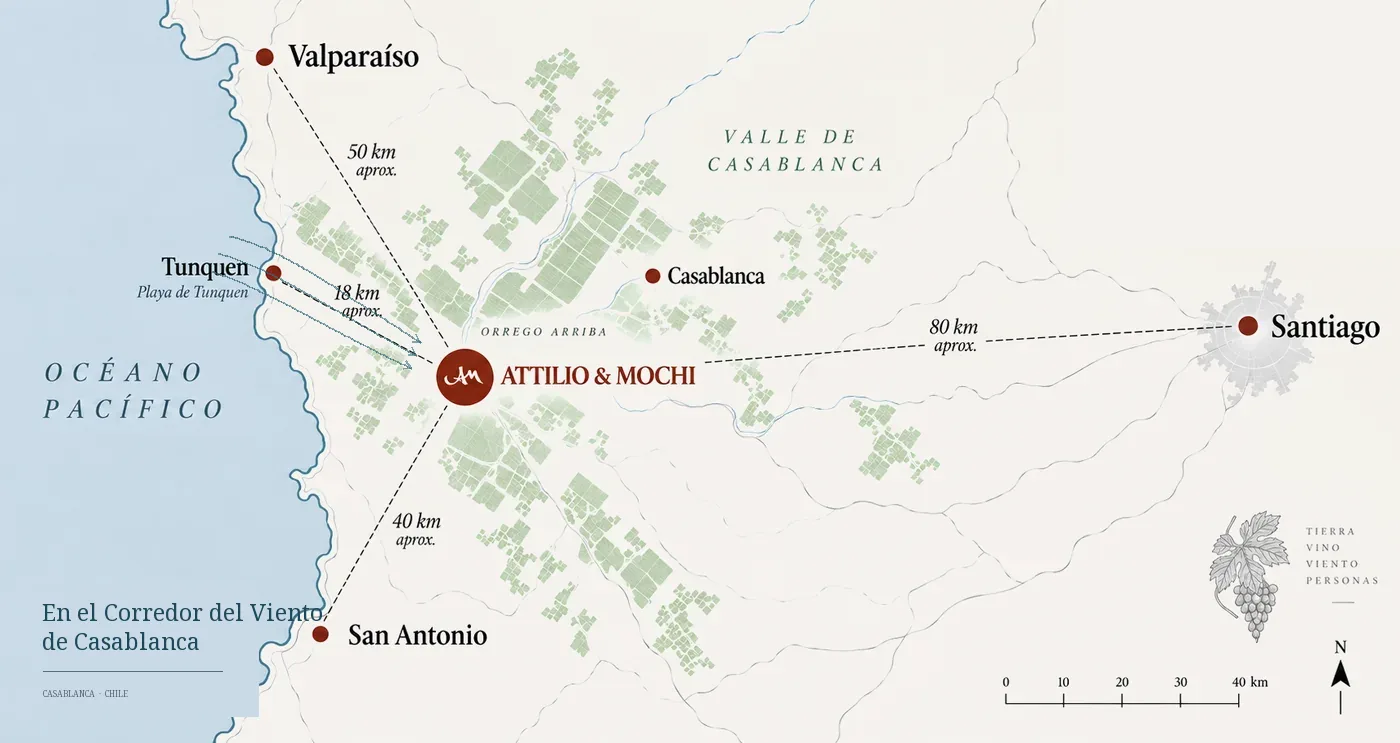
In Casablanca, Orrego Arriba is known as the "Wind Corridor".
Every day, cold Pacific air finds a natural route through the hills of the Coastal Range and crosses Orrego Arriba.
We feel it every day.
Sometimes as a cool breeze.
Other times as gusts that make you hold on to your hat.
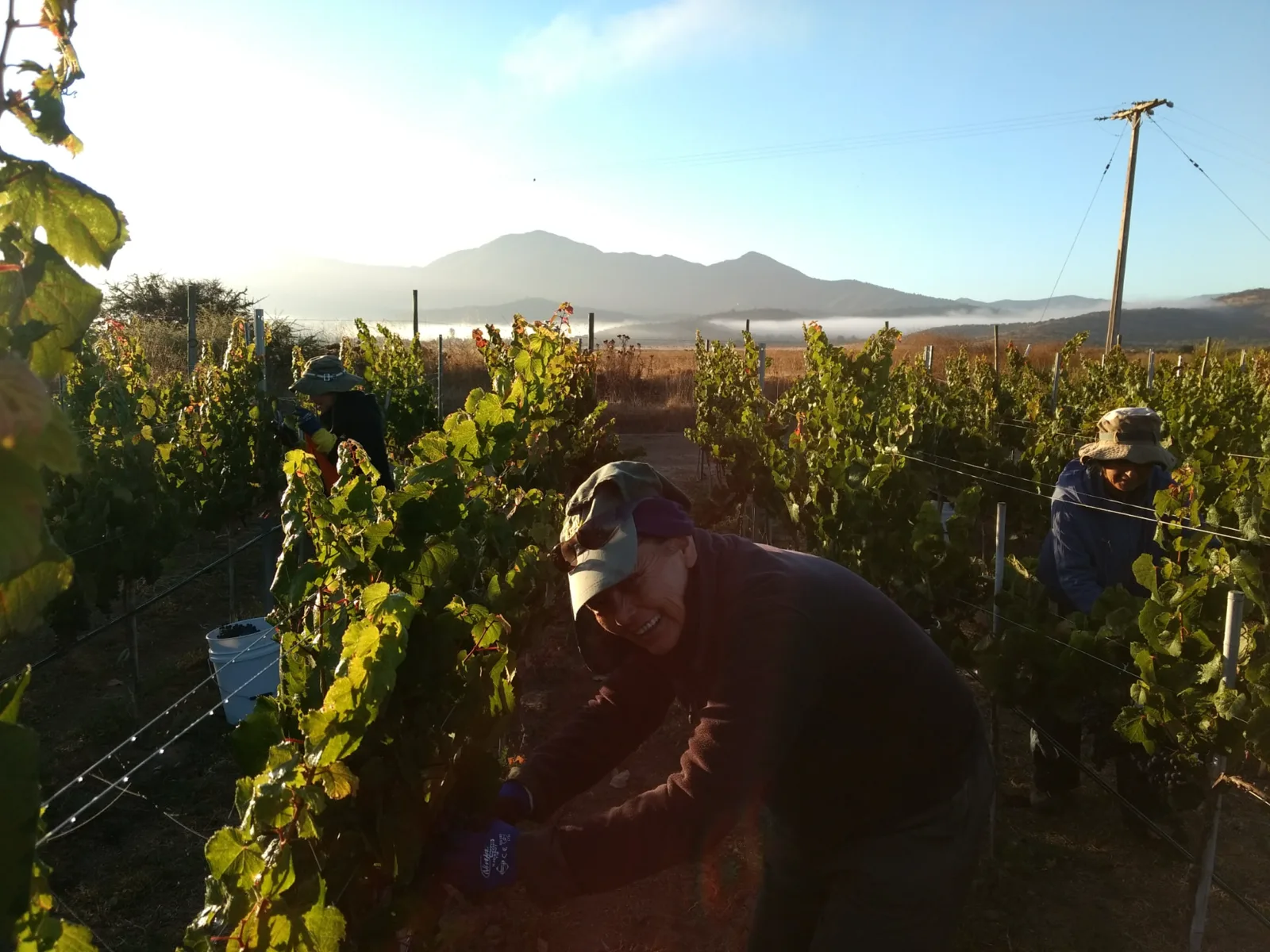
That constant flow helps dry the morning dew quickly, naturally reduces disease pressure and lets the grapes ripen more slowly.
It is one of the reasons we planted here.
Not despite the wind.
Precisely because of it.
PENDING PHOTOGRAPH · EVIDENCE OF THE WIND
Look for leaning shoots, moving cover crops, fog entering the vineyard, or flags or windsocks.
Climate panel
- 18 km
- from the Pacific Ocean
- 220–250 m
- above sea level
- 8–30 °C
- typical summer temperatures
- -2–15 °C
- typical winter temperatures
- 250–300 mm
- of annual rainfall
- May–September
- rainy season
Cool climate is not an abstract idea. It translates into slower ripening, higher natural acidity and wines that favour freshness, precision and a sense of place.
The vineyard, block by block
Select a block to discover its variety and the wines that begin there.
WHAT WE GROW
Some belonged naturally to Casablanca. Others arrived out of curiosity.
Eight varieties. Eight questions.
The ones you expected to find
Sauvignon Blanc
Casablanca helped turn it into a benchmark for Chilean cool-climate wine.
Pinot Noir
The valley's most widely planted red variety under its coastal influence.
Syrah
A deliberate exception for exploring cool-climate reds.
The ones that sparked our curiosity
Grenache
When we planted it, almost nobody imagined Grenache in Casablanca.
Roussanne
We wanted to understand how a Mediterranean variety could respond to a coastal setting.
Viognier
A gateway to aromatic, complex white wines.
Malbec
More tension, less ripeness and far more elegance than in warm regions.
Cabernet Franc
A search for freshness, herbs and spice rather than power.
A PRACTICAL DECISION
We did not build a winery to look like a winery.We built it to make wine.
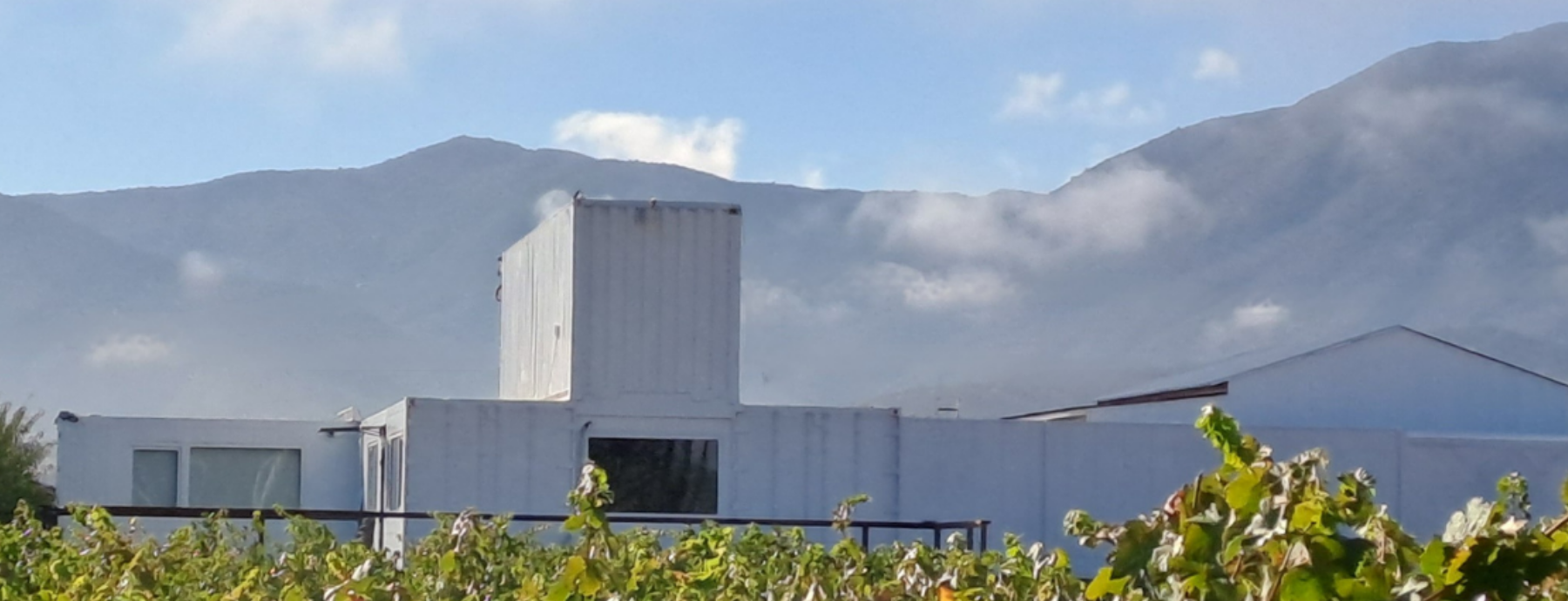
When the time came to build, we had two ports a few kilometres away and a simple question: did we really need to put up a large building to achieve thermal stability?
Refrigerated containers were already designed to solve exactly that problem. For years they had crossed oceans carrying temperature-sensitive goods.
Reusing them to make wine was simply the most logical solution.
They are still the heart of our winery. Not because they are different. Because they work.
A container designed to hold a constant temperature
- 01Outer steel wall
- 027 cm of injected polyurethane insulation
- 03Inner stainless steel lining
- 04A protected environment for making and ageing wine
Three concrete advantages
Thermal stability
The insulation reduces day-to-night temperature swings, helping keep steadier conditions for making and ageing wine.
Smart reuse
We give existing structures a second life instead of building from scratch.
Zero energy use
Thermal insulation removes the need for artificial climate control all year round.
Designed for the place where we live
Casablanca is a cool-climate valley, with moderate temperatures for much of the year and a strong oceanic influence.
The same environment that helps preserve the freshness of our grapes also lowers the winery's energy needs.
That is why the containers are not an architectural curiosity. They are part of a system built to work in tune with where we are.
FROM VINEYARD TO BOTTLE
Fewer recipes. More observation.
We do not follow a single formula for every wine. Each variety and each season raises different questions.
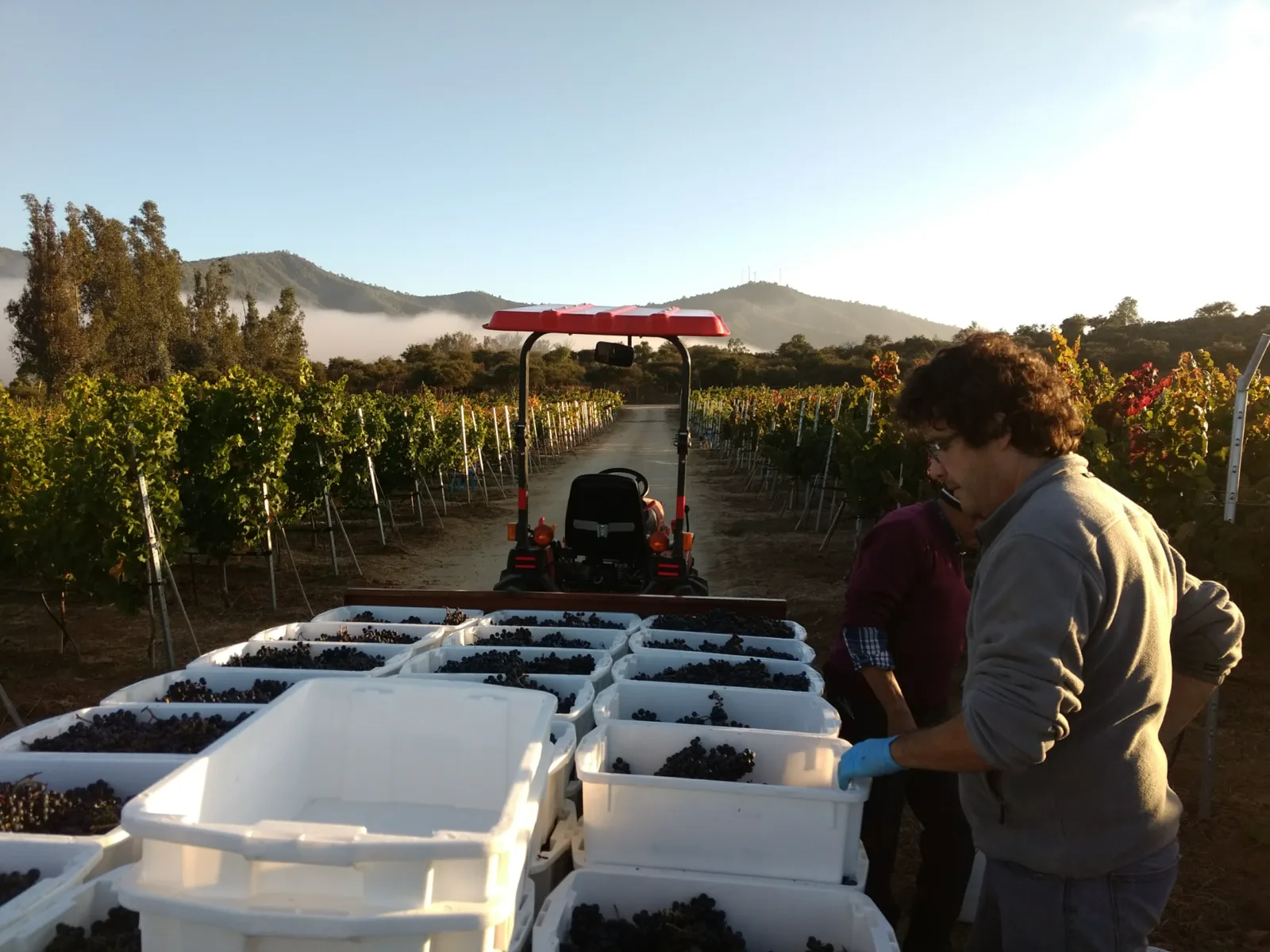
We harvest looking for balance rather than overripeness. We ferment with minimal intervention when it makes sense. And when it does not, we do what we believe is best for the wine.
We try, observe and adjust. Sometimes that leads to expected results. Other times it leads to wines like Night Rosé, fermented with sake yeast.
Curiosity is still one of our most important tools.
CONSEQUENCES OF A WAY OF WORKING
Sustainability is not a department. It is decisions.
REUSED CONTAINERS
We gave a second life to structures designed to maintain a stable temperature during ocean crossings.
EFFICIENT WATER USE
We apply only the water each plant needs.
ORGANIC FARMING
We work without synthetic pesticides to keep the soil alive.
COMPOSTING
Organic waste returns to the soil as organic matter.

BIOLOGICAL RESERVE
More than 10% of the property remains under native vegetation.
LIGHTER BOTTLES
They reduce emissions associated with international transport.
The best way to understand this place is to walk it.
The decisions we make in the vineyard, the winery and the field end up showing in every bottle.
But wine is only part of the story. The other part is here. Among the vines, the coastal wind and the conversations that start around a glass.
WHAT WE ARE EXPLORING NOW
Get new wines, vineyard experiments and projects before anyone else.
No spam. We don't share your data with anyone. We only write when we have something interesting to tell.